
Nine Ways Practitioners Attract Ideal Clients That Actually Work

Updated: 5 days ago

The practitioners who fill their practices fastest do four things well: they niche down instead of trying to help everyone, they publish useful content before asking for anything in return, they build referral relationships that compound over time, and they make booking a first session almost frictionless. Everything else, including social media, paid ads, and directory listings, works better once those four fundamentals are in place.
Here’s the short list of tactics worth prioritizing, in the order most practitioners should tackle them:
Define a specific ideal client profile — filters out mismatched inquiries before they waste your time
Rewrite your bio around outcomes, not credentials — speaks the language your ideal client actually searches
Publish one piece of value-first content per month — builds trust before the first conversation happens
Ask three current clients for referral introductions — referrals convert faster than any cold channel
Run a low-cost workshop or free intro session — gives hesitant prospects a safe way to experience your work
Build a simple discovery-call script — qualifies fit and answers objections in one conversation
Set up a short email nurture sequence — keeps warm leads engaged until they’re ready to book
The sections below break each of these into scripts, checklists, and a measurement plan you can run in the next 30 to 90 days.
Spine App is free: find people who help and a community that gets it. Get it on App Store · Google Play
Key Takeaways
Practitioners attract ideal clients most reliably by combining a specific niche, value-first visibility, referral partnerships, and a low-friction booking process, then measuring and adjusting monthly.
Point | Details |
Define before you market | Write your ideal client’s presenting problem, desired outcome, and search language in their own words. |
Rewrite bios around outcomes | Lead with benefits and one clear specialty instead of a list of credentials and modalities. |
Referrals convert fastest | Reach out to three referral partners a month, since most private practices report referrals as a top client source. |
Reduce booking friction | Show fees, use a live calendar link, and keep intake forms under five minutes. |
Track four numbers monthly | Watch inquiry source, consult-booking rate, conversion rate, and referral share to know what’s working. |
Extend reach with a platform | A Spine App listing complements owned channels by reaching people already searching across conventional and holistic care. |
Table of Contents
Ways Practitioners Attract Ideal Clients by Defining Who They Actually Want
Most practitioners describe their ideal client by age range and a diagnosis category. That’s not specific enough to attract anyone in particular, and generalist copy is precisely what makes practices hard to find. Practitioners who niche clearly and keep messaging consistent across their website, directory profile, and email fill their practices faster than those who stay broad.
An ideal client profile (ICP) needs five fields, not two:
Presenting problem — the specific issue they’d type into a search bar at 11 p.m., in their words, not clinical language
Desired outcome — what life looks like when the work is done, stated concretely
Search phrases — the actual terms they use (a client rarely searches “somatic dysregulation”; they search “why do I feel anxious all the time”)
Decision obstacles — cost concerns, skepticism about therapy or coaching, past bad experiences, or uncertainty about mixing approaches
Typical referral source — a doctor, a friend, a podcast, a directory search, a support group
Validate the profile before you build anything on top of it. Pull the intake notes from your last 15 to 20 clients and look for repeated language and repeated turning points. Interview two or three former clients about why they chose you and almost never why they left. Then run your suspected search phrases through a free keyword tool to confirm people are actually typing them.
Pro Tip: If you can’t write your ideal client’s presenting problem in the exact words they’d use, sit in on your own intake calls for a week and write down every phrase verbatim. That transcript is more useful than any client-avatar worksheet.
Writing a Profile and Bio That Convert Browsers into Bookings
A profile that lists your degrees and modalities reads like a resume. A profile that opens with an outcome reads like an answer to the question your visitor just typed into a search engine. That difference shows up directly in booking rates.
Use this checklist when rewriting a directory profile or website bio:
Headline states a benefit, not a title (“Help for new parents who feel constantly on edge” beats “Licensed Marriage and Family Therapist”)
One clear specialty phrase, not five modalities crammed into a sentence
Subhead names the outcome, framed around what changes, not what technique you use
Fee transparency or a fee range, since ambiguity here is one of the biggest reasons a good-fit lead never inquires
One visible booking call to action, repeated near the top and bottom of the page
Filterable tags for age group, modality, and population, since most directories rank on how completely a profile is filled out
Translate clinical language into plain language throughout. “EMDR for trauma processing” becomes “a structured approach for people who feel stuck reliving a difficult experience.” The clinical term can stay as a subordinate detail for readers who already know what they’re looking for, but the outcome has to lead.
Social proof belongs near the booking button, not buried in an “about” page. A short, general outcome statement (“clients often report feeling more grounded within a few sessions”) works without disclosing anything identifiable. If you use testimonials, keep them brief, anonymized, and focused on the transformation rather than the process. Reviews and directory ratings do this work automatically and carry more weight with new visitors than anything you write about yourself.

Pro Tip: Read your bio out loud. If it sounds like it belongs in a textbook, rewrite the sentence the way you’d explain your work to a neighbor at a barbecue.
Which Visibility Channels Should You Test First?
Most practitioners try to be everywhere at once and end up nowhere in particular. Pick one or two channels, run them for 60 to 90 days, and measure before adding a third.
Content and search visibility compound over time, so start there if you have any bandwidth at all. An attraction marketing approach that leads with free, useful content, like how-to guides, short webinars, or downloadable worksheets, builds durable trust and tends to bring higher-quality leads than paid ads that interrupt someone’s scroll. Publish three content types first:
Niche FAQ pages answering the specific questions your ideal client already has (What does the first session look like? How long does this usually take? Does insurance cover this?)
Service pages written around outcomes, one per specialty, not one generic “services” page trying to cover everything
Outcome-driven articles that walk through a common problem and how your approach addresses it, without promising a specific result for every reader
Being specific and transparent about pricing and process, rather than vague, tends to filter out mismatched leads early and pulls in people who are already close to ready to book, according to marketing research on trust-building from private-practice case studies.
Social media works best as a relationship-building layer on top of content, not a replacement for it. The formats that consistently perform for practitioners are short client-transformation stories (anonymized), micro-teaching clips that answer one question in under 90 seconds, and live or recorded Q&A sessions. Pick the platform where your ideal client already spends time, since a small, engaged audience on the right platform outperforms a large one on the wrong platform.
Referral partnerships remain one of the fastest routes to trust, since most private practices name referrals and online directories as their top client sources. Reach out to three categories of partners:
Doctors, physical therapists, or other medical providers who see patients with overlapping concerns
Coaches or bodyworkers whose clients often need a complementary form of support
Community organizations, parenting groups, or workplace wellness programs
Keep the outreach short: introduce your specialty, name one specific type of client you’d be a good referral fit for, and offer to do the same in return. Workshops and short free sessions work as an on-ramp when they’re structured tightly. A 45-minute workshop on one narrow topic, followed by a clear invitation to book a consult, converts better than a broad “intro to my practice” event because it lets a prospect experience your style before committing.
You can build this kind of visibility ecosystem gradually. Clarity in messaging, paired with SEO, social presence, and partnerships working together, consistently outperforms any single channel used alone.
Designing a Discovery Call That Converts and Qualifies
The gap between an inquiry and a booked client usually comes down to friction, not interest. A well-structured discovery process, meaning a short intake questionnaire paired with a brief consult, works as an effective filter that saves everyone time and improves fit before the first full session even happens.
Pick one intake format and stick with it:
A short questionnaire (five to eight questions) sent immediately after inquiry, covering presenting concern, prior experience with therapy or coaching, and scheduling preferences
A 15 to 30 minute consult call, structured, not open ended, to confirm fit on both sides
A diagnostic worksheet for practitioners whose work benefits from a written starting point before the first conversation
Your booking flow should include visible fees or a fee range, a live calendar link rather than a “contact us to schedule” dead end, automatic reminders, and an intake form that takes under five minutes. Every extra step between interest and a booked slot costs you a percentage of leads. Scheduling tools built for appointment-based practices, similar to systems used in other service industries, show how much friction disappears when calendar booking, reminders, and intake happen automatically instead of over email back-and-forth.
Structure the discovery call itself around four moves: open with a genuine question about what prompted them to reach out, reflect back what you heard in your own words, briefly explain how your approach fits their situation, and close with a specific next step, either booking the first session or a clear no if it’s not a fit.
Pro Tip: End every discovery call with a specific next action and a date, not “let me know if you’d like to move forward.” Vague endings are where warm leads go cold.
Keeping Leads Warm Until They’re Ready to Commit
Not every good-fit prospect books after one conversation, and chasing them with a single follow-up email rarely works. A short nurture sequence keeps you present without feeling pushy.
Day 1: A thank-you email confirming what you discussed and one resource related to what they mentioned
Day 4: A short piece of value, an article, a two-minute video, or a worksheet addressing their specific concern
Day 10: A gentle check-in asking if now is the right time, with an easy way to book if it is
Day 21: A final, low-pressure note leaving the door open, since timing rather than interest is often the real obstacle
Segmenting these sequences by presenting concern rather than sending one generic sequence to everyone meaningfully increases engagement, with segmented campaigns showing markedly higher open rates than blanket emails.
Between individual sessions, low-friction group offerings, like a monthly drop-in session or a themed discussion group, give former inquiries and past clients a reason to stay connected without committing to ongoing one-on-one work. This also becomes a natural place for referrals to surface, since people bring friends to a group setting more readily than they’d recommend individual therapy out of the blue.
Referral incentives don’t need to be cash. A free session credit, early access to a workshop, or a small thank-you gift after a successful referral works well and avoids the ethical gray areas that cash referral fees can raise in clinical settings.
Tracking What’s Working Before You Invest More
Most practitioners can’t say which channel actually brought their last five clients. That single blind spot wastes more marketing time than any bad tactic.
Track four numbers on one simple sheet, spreadsheet or otherwise: inquiry source (where they found you), consult-booking rate (percentage of inquiries that book a call), consult-to-client conversion (percentage of calls that become paying clients), and referral share (percentage of new clients from referrals versus other channels). Practitioners who build this kind of structured attraction system, meaning a defined audience, clear positioning, specific lead channels, and consistent tracking, report more predictable client flow and less burnout than those running ad-hoc tactics.

Set up basic UTM tags on any link you share, add an intake-source field to your questionnaire, and log both in one shared tracking sheet you actually update weekly.
Then run one test at a time using a simple structure: state a hypothesis (“posting one client-story reel per week will increase profile visits”), pick one metric to watch, and give it 30 to 90 days before judging results. Testing everything at once tells you nothing about what worked.
How Spine App Fits into Your Broader Attraction Strategy
Owned channels like your website and email list build long-term equity, but platforms extend your reach to people who are actively searching and don’t yet know your name. Spine App lists practitioners, sessions, events, and podcasts across conventional care, holistic and alternative approaches, and combinations of both, giving searchers a starting point when they’re not sure which kind of support fits their situation.
A platform listing works best when it mirrors the same clarity you’ve built into your own bio:
Lead with your specific specialty, not a list of every modality you’re trained in
Name the outcome you help people work toward, in plain language
Link directly to your booking flow so a match doesn’t dead-end at a contact form
Include a short intake question or two if the platform allows it, so inquiries arrive pre-qualified
Fold your Spine App listing into the same follow-up sequence you use for website inquiries. A lead that finds you through a platform search deserves the same discovery-call structure and the same nurture emails as one who found you through a referral. The channel changes; the process that converts them shouldn’t.
Pro Tip: Update your Spine App profile every time you update your website bio. Mismatched messaging across platforms is one of the quietest ways practitioners lose warm leads.
What Most Client Attraction Advice Gets Backward
Most advice on this topic treats visibility as the bottleneck. It isn’t. The practitioners who struggle to fill their practice usually have plenty of traffic and not enough clarity, a bio that tries to serve everyone, a booking process with too many steps, or a follow-up habit that stops after one email. Fix those before adding another marketing channel.
The conventional playbook also overweights social media relative to what actually converts. A referral from a trusted doctor or a well-optimized service page answering a specific question will out-convert a viral post nearly every time, because both meet someone at the moment they’re already looking for help.
If you take one thing from this: write your ideal client profile down in actual words, not a mental sketch, and check every piece of copy against it before you publish anything else. Everything downstream, your bio, your content, your intake form, works better once that foundation exists. Prioritize the on-ramp next. A confused or slow booking process erases the trust you spent months building.
Give Your Practice a Home on Spine App
Spine App is a practical next step for practitioners who’ve done the work above and want another door for the right people to find them. Unlike building yet another standalone website or paying for ad placements that disappear the moment the budget runs out, a Spine App listing sits inside a platform people already use when they’re actively trying to figure out what kind of support fits their situation, whether that means a conventional provider, a holistic practitioner, or both.
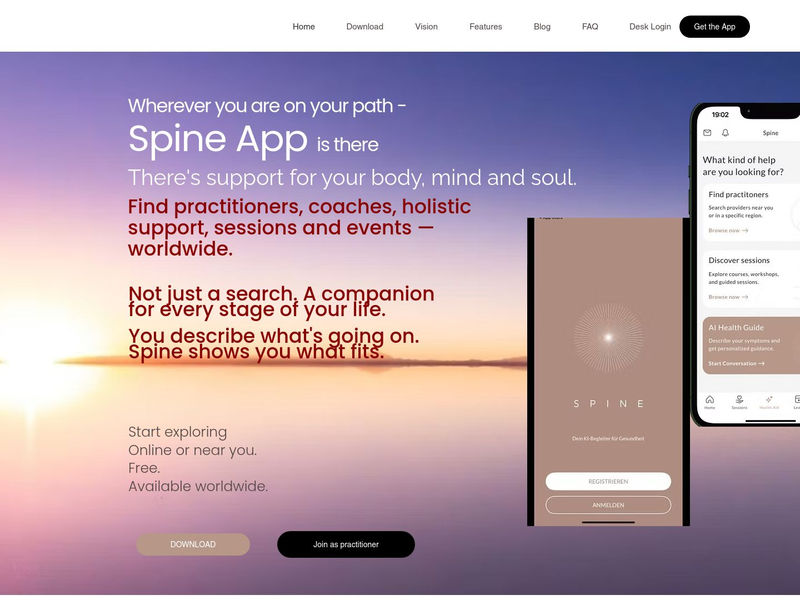
Spine App hosts more than practitioner directories. It connects people to sessions, events, and podcasts too, so your listing can point to a workshop you’re running or an episode where you talk through your approach, not just a static profile page. If you offer a free intro session or a short workshop, that’s a natural first listing to feature.
Start by claiming or updating your Spine App profile with the same outcome-focused language from your website bio, then link it directly to your booking flow so an interested visitor never hits a dead end. If podcasting or hosting sessions is part of how you connect with prospective clients, the Spine App podcast page shows how that content fits alongside practitioner and event listings.
Sources
FAQ
What Is the Best Way to Attract Clients as a Practitioner?
Combine a specific ideal client profile, an outcome-focused bio, and a low-friction booking process. Practitioners who niche clearly and keep consistent messaging across their website, directory, and email tend to fill their practices faster than generalists.
What Are Four Reliable Ways to Attract New Clients?
Referral partnerships, value-first content like FAQs and service pages, a clear directory profile with visible fees, and a short discovery-call process that qualifies fit before the first full session.
What Are the Steps to Attracting New Clients as a Therapist or Coach?
Define your ideal client’s problem and search language, rewrite your bio and directory profile around outcomes, publish content that answers their specific questions, build referral relationships, simplify your booking flow, follow up with a short nurture sequence, and track which channel actually converts.
What Attracts Ideal Clients the Most?
Clarity attracts more than volume of marketing activity. A specific, outcome-focused profile paired with transparent pricing and an easy booking process tends to convert better than broad appeals to everyone.
Is It Okay to Combine Therapy with Coaching or Holistic Care?
Yes. Many people work with a doctor or therapist while also using coaching, bodywork, or other holistic support for different aspects of their situation. Combining paths is common and does not replace medical or psychological treatment; it works alongside it.
Can Spine App Help Me Find Both Conventional and Holistic Support?
Spine App lists practitioners, sessions, events, and podcasts across conventional care, holistic and alternative approaches, and combinations of both, so you can explore options based on your own situation without choosing one path as more valid than the other.
How Do I Know If I Need a Discovery Call Before Booking a Session?
A short discovery call or intake questionnaire helps confirm fit before committing to ongoing sessions, which saves time for both you and the practitioner and reduces the chance of mismatched expectations later.
Recommended
About Spine App
Spine App is a free life companion app for your health: it connects you with real practitioners – conventional, holistic or both – lets you book sessions directly, and checks in afterwards to ask what helped.
Written by the Spine App Editorial Team.
Spine App is free: find people who help and a community that gets it. Get it on App Store · Google Play
Listing on Spine App
Free to join, fee only when someone books. No membership, no subscription, no monthly fee. Your profile, your sessions, your events and your own podcast are all included. A service fee applies only once a booking has gone through, and both sides pay it. For practitioners
