The Role of Community in Mental Wellness: A Real Guide
- astauche6
- Jul 19
- 8 min read

Strong community ties are defined by research as an independent protective factor against clinical depression and anxiety disorders, operating separately from close personal relationships and family bonds. The role of community in mental wellness goes beyond simple social contact. It activates distinct psychological and physiological mechanisms that individual therapy or self-care alone cannot replicate. Whether you are navigating grief, a career shift, or a period of prolonged stress, the quality of your social embedding shapes how well you recover and how resilient you remain. This guide explains how those mechanisms work, what types of support exist, and how to build connections that genuinely hold.
How does community involvement improve mental wellness?
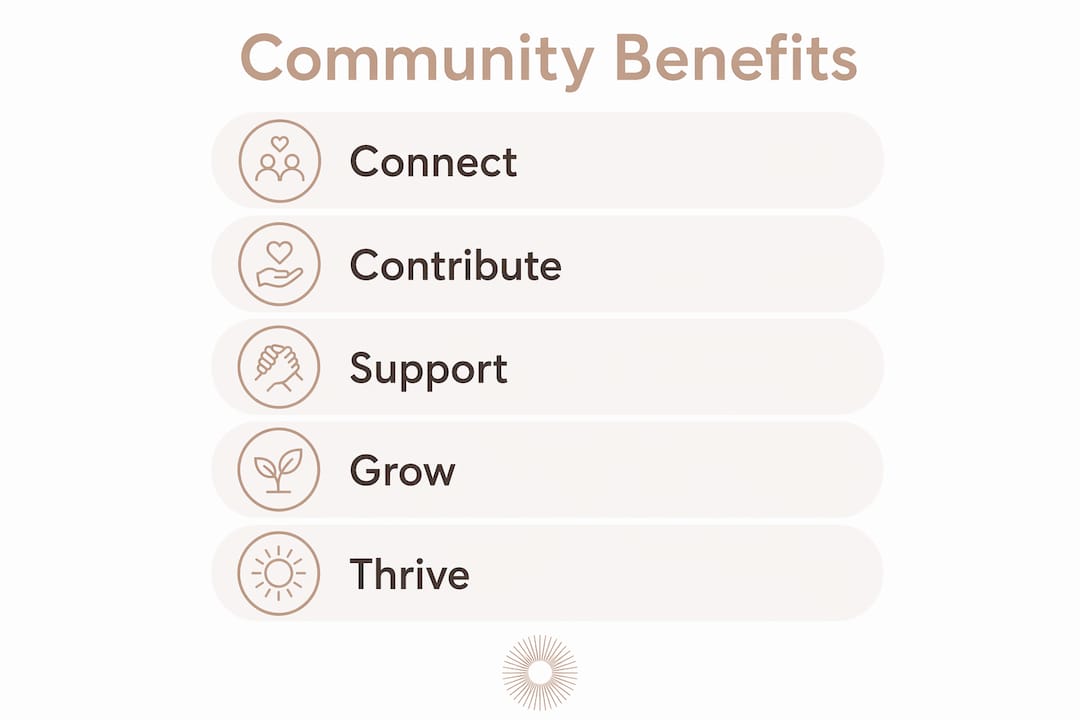
Community involvement improves mental wellness through several distinct pathways, not just by reducing loneliness. Each pathway operates on a different level, from the neurological to the behavioral.
Belonging is a fundamental biological need. When that need goes unmet, the body activates stress responses equivalent to physical pain. This means social exclusion is not just emotionally uncomfortable. It is physiologically costly.
The core mechanisms include:
Reduced isolation. Feeling embedded in a group lowers the neural circuits associated with social pain. Social embedding calms the nervous system and reduces cortisol-linked stress responses.
Behavioral norms. Communities create shared standards for healthy behavior. Social norms influence motivation and accountability in ways that individual willpower rarely sustains.
Collective efficacy. Groups that solve problems together counter the helplessness that underlies depression. Seeing your group advocate for change or mobilize resources builds personal confidence alongside group strength.
Prosocial contribution. Giving through community contributes to individual wellbeing more reliably than receiving support alone. Contribution creates meaning, and meaning sustains mental health.
Pro Tip: Ask yourself whether a group you belong to asks anything of you. Groups that only consume your attention rarely build genuine belonging. Groups that invite your contribution do.
The distinction between genuine involvement and surface-level participation matters here. Scrolling a group chat or attending a single event does not produce the same effects as recurring, active membership. The psychological benefits accumulate through repeated, meaningful contact over time.
What types of community support are available?
The range of community-based mental health support is wider than most people realize, and access is often simpler than expected.

Organizations such as NAMI affiliates provide peer groups, workshops, and one-on-one support, with many services free to residents through easy self-referral. No clinical referral or diagnosis is required to attend most peer support programs. That low barrier matters enormously for people who are not yet ready for formal therapy.
The main categories of support available include:
Peer support groups. Led by people with lived experience, these groups reduce stigma and build shared understanding. They work particularly well for grief, addiction recovery, and chronic illness.
Structured wellness programs. Group health coaching and living-well programs combine social learning with skill-building. Research shows these programs improve confidence and a sense of control over wellbeing, particularly for older adults.
Volunteering and civic groups. Regular volunteering creates recurring contact with a defined group, which is the structural condition most likely to produce genuine belonging.
Faith and values-based groups. These offer consistent membership, shared purpose, and a built-in schedule of contact.
Online groups with recurring formats. Weekly video calls or moderated forums can provide real benefit when in-person access is limited, though they work best when membership is stable and participation is active.
Format | Best suited for | Access |
Peer support groups | Grief, recovery, chronic illness | Self-referral, often free |
Structured wellness programs | Older adults, life transitions | Community health centers |
Volunteering | Isolation, low confidence | Local nonprofits, libraries |
Online recurring groups | Limited mobility, rural areas | NAMI, mental health platforms |
The advocacy role of community also deserves attention. Groups that actively work to improve conditions for their members provide a sense of purpose that passive support groups cannot match.
Why quality of engagement matters more than quantity
Depth of involvement predicts mental health outcomes more reliably than the number of groups you belong to. Deep engagement in one or two communities with active roles produces stronger outcomes than many superficial memberships.
The reason is psychological safety. When you know a group well enough to take risks, share honestly, and disagree without fear of rejection, the group becomes a genuine resource for resilience. That level of trust takes time and repeated contact to build.
Signs of meaningful versus superficial engagement:
Meaningful: You have a defined role, people notice when you are absent, and you contribute regularly.
Meaningful: The group has a history and a shared language you have learned over time.
Superficial: You attend occasionally without anyone knowing your name.
Superficial: The group exists primarily online with no stable membership or recurring format.
Small, repeated interactions build community over time. Digital groups or one-off events rarely provide equivalent benefits. This is not a criticism of online connection. It is a recognition that frequency and consistency matter more than the medium.
Pro Tip: Before joining a new group, ask how long it has been running and whether members know each other by name. Longevity and familiarity are the clearest signals of genuine collective life.
Active contribution through volunteering and mentoring significantly increases both sense of affiliation and measurable mental health benefits. Passive attendance produces far less. If you want the full benefit of community, find a way to be useful within it.
How does community support mental wellness during life transitions?
Life transitions, including job loss, divorce, bereavement, relocation, and recovery from illness, are the moments when social embedding matters most and is most often disrupted. The loss of a role or a routine frequently strips away the community structures that were quietly sustaining mental health.
Community programs reduce internalized stigma and promote recovery by creating safe, inclusive environments where belonging is not conditional on performance or status. That unconditional quality is what makes group support during transitions qualitatively different from professional support alone.
Relational mechanisms in community settings foster psychological safety and positive behavioral changes. When a group holds you accountable with warmth rather than judgment, you are more likely to take the small steps that compound into recovery.
“Traditional biomedical approaches often overlook the social dimension of recovery. Community-based frameworks directly influence neurobiological healing by restoring the conditions under which the nervous system can regulate itself. The group is not just emotional support. It is part of the treatment.”
Practical examples of this in action include grief support circles that meet weekly for months, not once; recovery-oriented programs where members mentor newer participants; and neighborhood mutual aid groups that give isolated residents a reason to leave home and a place where they are expected. The peer support role in recovery is well-documented in both clinical and community settings. It works because shared experience reduces the shame that often blocks people from seeking further help.
What are actionable steps for building community connections?
Building genuine community connections does not require a dramatic change in lifestyle. It requires consistency applied to small, repeatable actions.
Start with one recurring commitment. Choose a group that meets on a fixed schedule, whether a weekly class, a volunteer shift, or a support group. Consistency is the foundation of belonging.
Introduce yourself more than once. First impressions rarely stick. Repeated contact is what moves you from stranger to member.
Take on a small role. Offer to set up chairs, send reminders, or welcome new members. Active roles within groups deepen connection faster than attendance alone.
Look for collective efficacy. Choose groups that solve problems together, advocate for members, or take collective action. Signs of collective efficacy indicate a group that will build your confidence, not just your calendar.
Use structured resources to find your starting point. NAMI’s local affiliates, community health centers, and platforms like Spine App offer searchable access to peer groups, wellness programs, and practitioners who work within community-based frameworks.
Pro Tip: Give a group at least six consistent sessions before deciding it is not working. Belonging takes time to develop, and the discomfort of being new is not the same as the group being wrong for you.
The types of support that complement therapy often include community-based options that are easier to access than formal clinical care. Combining both produces better outcomes than either alone.
Key Takeaways
Community involvement is the most consistently underused protective factor in mental health, and its benefits are available to anyone willing to show up repeatedly.
Point | Details |
Community ties are independent protectors | Strong group connections reduce depression and anxiety separately from family or close friendships. |
Active contribution beats passive attendance | Volunteering or taking a role in a group produces stronger belonging and mental health gains. |
Depth matters more than breadth | One or two deeply engaged communities outperform many superficial memberships. |
Transitions need community most | Life changes disrupt existing social structures; rebuilding group connection is part of recovery. |
Consistency is the core requirement | Repeated, low-stakes interactions over time are what turn acquaintances into genuine support. |
What I have learned about community and mental health
By Sylvia Leifheit
The most common mistake I see people make when they are struggling is waiting until they feel ready to connect. They imagine that once they feel better, they will join a group or reach out. But community is not the reward for recovery. It is one of the conditions that makes recovery possible.
What the research confirms, and what I have observed repeatedly, is that the people who recover most fully from difficult transitions are rarely the ones who worked hardest in isolation. They are the ones who found a group, showed up consistently, and eventually became the person who helped someone else. That shift, from receiving to contributing, is where the real psychological change happens.
The other misconception worth naming is that online connection is equivalent to in-person embedding. It can supplement, but it rarely substitutes. The nervous system responds to physical presence, shared space, and the small rituals of recurring contact in ways that a screen does not fully replicate. This is not an argument against digital support. It is an argument for not letting it become your only source.
If you are in a transition right now, the most useful thing you can do is find one group with a fixed schedule and attend it three times before you decide anything. That is a low enough commitment to be realistic and high enough to give belonging a genuine chance.
— Sylvia
Finding the right support with Spine App
When you are ready to look for practitioners, group sessions, or wellness programs that fit your situation, the search itself can feel like an obstacle.
[
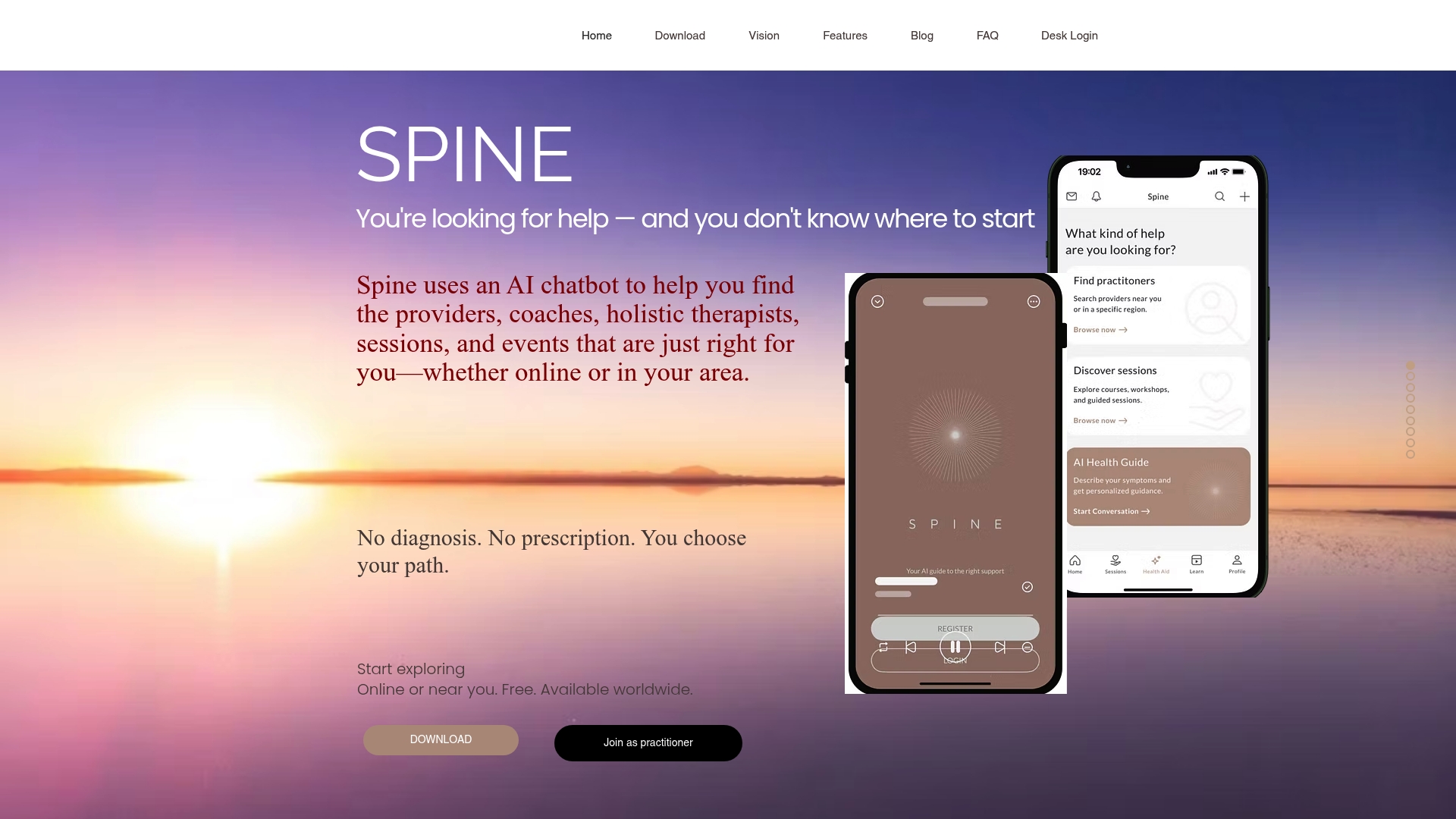
Spine App removes that obstacle. You describe what you need in your own words, and Spine App guides you to practitioners, coaches, group sessions, and events matched to your situation, whether you prefer conventional care, alternative approaches, or a combination of both. The platform is available on iOS, Android, and Web across 175 countries, in English, Spanish, and German. If you are looking for community-based mental wellness support, Spine App gives you a clear starting point without the guesswork of searching alone.
FAQ
What is the role of community in mental wellness?
Community provides distinct psychological protections against depression and anxiety that operate independently of close personal relationships. These include collective efficacy, shared behavioral norms, and the sense of belonging that calms physiological stress responses.
How does community support differ from individual therapy?
Individual therapy addresses personal history and internal patterns, while community support provides social embedding, shared experience, and relational accountability. Research shows that combining both produces stronger outcomes than either approach alone.
What are the best types of community support for mental health?
Peer support groups, structured wellness programs, and volunteering roles consistently show strong mental health benefits. The key factor is recurring contact with a stable membership, not the format itself.
How long does it take for community involvement to improve mental health?
Genuine belonging develops through repeated interactions over weeks and months, not a single event or session. Committing to at least six consistent sessions with a group gives the process enough time to produce measurable change.
Can online groups provide real community support for mental wellness?
Online groups with stable membership and recurring formats can provide meaningful support, particularly when in-person access is limited. They work best when participation is active rather than passive, and when the same people show up consistently over time.
Recommended