Complementary Mental Health Care: What You Need to Know
- Sylvia Leifheit
- 2 days ago
- 7 min read

Complementary mental health care is the use of non-traditional therapies alongside standard treatments to support psychological well-being and symptom management. The industry term for this broader field is Complementary and Alternative Medicine, or CAM, though “complementary” specifically means used with conventional care, not instead of it. Nearly 50% of American adults have tried complementary approaches for mental health concerns. That number signals a real shift in how people think about their care. Practices like yoga, mindfulness meditation, acupuncture, and music therapy now sit alongside psychiatry and psychotherapy in many treatment plans.
What is complementary mental health care?
Complementary mental health care is defined as therapies and practices used in addition to conventional psychiatric or psychological treatment. The NIH’s National Center for Complementary and Integrative Health (NCCIH) describes these approaches as distinct from standard Western medicine but not opposed to it. The key word is “alongside.” A person taking antidepressants who also practices mindfulness meditation is using a complementary approach. The medication stays. The meditation adds another layer of support.
This distinction matters because people often use “complementary” and “alternative” interchangeably, but they describe different choices. Alternative care replaces conventional treatment. Complementary care works with it. Getting this right shapes how safely and effectively you can build a care plan.
What are the main types of complementary therapies for mental health?
The NCCIH identifies several broad categories of complementary therapies used in mental health care. Each addresses psychological well-being through a different mechanism.
Mind-body practices are the most widely used category:
Mindfulness meditation: Trains attention and reduces rumination, with strong evidence for anxiety and depression.
Yoga: Combines movement, breathwork, and focused attention. Research supports its use for stress, depression, and PTSD.
Tai chi: A slow, deliberate movement practice that reduces anxiety and improves sleep quality.
Creative arts therapies work through expression rather than analysis:
Music therapy: Uses structured musical engagement to process emotion and reduce psychological distress.
Art therapy: Provides a non-verbal outlet for trauma, grief, and anxiety.
Body-based and natural approaches include:
Acupuncture: Used for anxiety, depression, and sleep disorders, with a growing evidence base.
Massage therapy: Reduces cortisol and supports nervous system regulation.
Herbal remedies: St. John’s Wort, valerian, and others are used for mood and sleep, though with significant safety caveats.
The mental health conditions most commonly addressed through these complementary therapies include depression, generalized anxiety disorder, PTSD, and insomnia. Evidence strength varies considerably across therapies and conditions. Mindfulness has the deepest research base. Herbal remedies have the most safety concerns.
What are the benefits of complementary mental care?
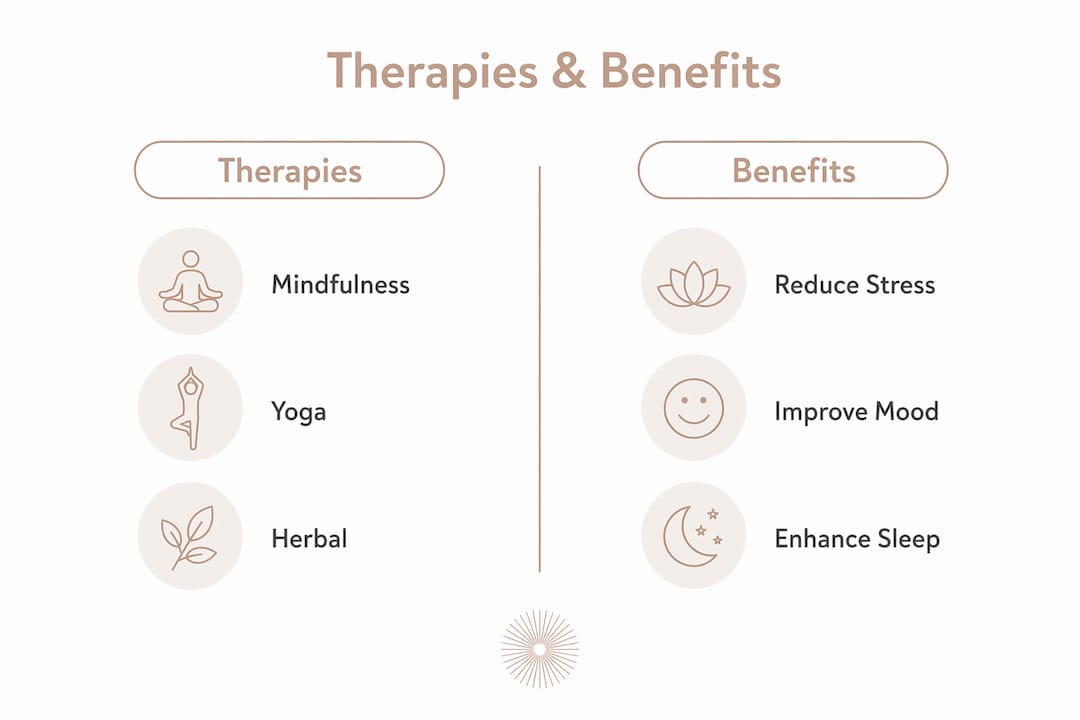
The evidence for integrating complementary therapies with conventional treatment is growing. A 2026 meta-analysis of 68 reports confirmed that combining CAM therapies with conventional mental health treatments produces measurable improvements in depression, anxiety, and sleep. That is not a marginal finding. It means the combination outperforms either approach used alone.

The VA’s data on Veterans offers another clear signal. About 1 in 3 U.S. Veterans use Complementary and Integrative Health practices, and 96% of those Veterans report benefit for symptoms including PTSD. That adoption rate within a population with complex, treatment-resistant conditions speaks to real perceived and measured value.
The mechanisms behind these benefits are not mysterious. Mind-body practices reduce cortisol, regulate the autonomic nervous system, and improve sleep architecture. Creative therapies give people a way to process experiences that resist verbal expression. Body-based approaches like acupuncture and massage work through the nervous system and musculoskeletal tension that often accompanies chronic stress. You can read more about body-based approaches for stress and how they interact with conventional care.
Pro Tip: Treat complementary therapies as long-term lifestyle practices, not short-term symptom fixes. People who view these practices as part of a sustained approach consistently show better clinical outcomes than those expecting immediate relief.
How does complementary care differ from alternative and integrative approaches?
These three terms describe meaningfully different choices, and confusing them can lead to real harm. The Merck Manual defines each clearly.
Approach | Definition | Relationship to conventional care | Typical use case |
Complementary | Used alongside conventional treatment | Additive | Yoga added to antidepressant therapy |
Alternative | Used instead of conventional treatment | Replacement | Herbal remedy used in place of prescribed medication |
Integrative | Coordinated whole-person care combining both | Coordinated | Psychiatrist and acupuncturist collaborating on a shared plan |
The integrative model is the most clinically sound. It requires coordination between providers, shared records, and a treatment philosophy that sees the person as a whole rather than a set of symptoms. Whole Health models that formally integrate complementary practices with conventional mental health care yield the best safety and patient outcomes.
The practical difference for you: if your psychiatrist and your yoga therapist do not know about each other, you are using a complementary approach. If they communicate and coordinate your care, you are receiving integrative care. The second is safer and more effective. Exploring how therapy and bodywork work together can help clarify what coordinated care looks like in practice.
How do you safely incorporate complementary therapies into your mental health care?
Safety in complementary mental health care depends on communication, credential checking, and realistic expectations. Mind UK is direct: telling your conventional healthcare providers about every complementary therapy you use is not optional. It is the baseline for safe care.
Follow these steps before starting any complementary therapy:
Tell your prescribing provider. Herbal remedies in particular can interact with psychiatric medications. St. John’s Wort, for example, reduces the effectiveness of several antidepressants and can trigger serotonin syndrome when combined with SSRIs. Your prescriber needs to know.
Check practitioner credentials. Practitioner training varies widely across complementary fields. Ask directly about their formal training, professional membership, and experience working alongside mental health providers. A yoga teacher with trauma-informed training is not the same as one without it.
Verify the evidence base. Ask your provider or check NCCIH resources to understand what research supports the therapy for your specific condition. Mindfulness for anxiety has strong evidence. Some herbal supplements have almost none.
Start one therapy at a time. Adding multiple new practices simultaneously makes it impossible to know what is helping or causing side effects.
Monitor and report changes. Track your mood, sleep, and symptoms. Report any changes to your conventional provider promptly.
Herb-drug interactions represent the most serious safety risk in this space. They are also the most preventable. Full disclosure to your healthcare team eliminates most of the danger.
Pro Tip: When evaluating a complementary practitioner, ask one specific question: “Have you worked with clients who are also receiving conventional psychiatric care?” Their answer will tell you more than any credential list.
If you are supporting a partner through mental health challenges while exploring these options together, helping a partner with depression requires its own careful approach, separate from your own care decisions.
Key Takeaways
Complementary mental health care works best when it is used alongside conventional treatment, coordinated with your healthcare team, and sustained as a long-term practice rather than a short-term fix.
Point | Details |
Definition is precise | Complementary means used with conventional care, not instead of it. |
Evidence is real but uneven | A 2026 meta-analysis confirmed measurable gains in depression, anxiety, and sleep from combined care. |
Safety requires disclosure | Always tell your prescribing provider about every complementary therapy, especially herbal remedies. |
Integrative care is the gold standard | Coordinated care between conventional and complementary providers produces the best outcomes. |
Credentials matter | Ask practitioners directly about their training and experience with mental health collaboration. |
What I’ve learned about complementary care after years of watching people use it
The most common mistake I see is treating complementary therapies as a backup plan. Someone tries conventional treatment, feels frustrated with the pace of progress or the side effects, and quietly adds acupuncture or a herbal supplement without telling their psychiatrist. That is not complementary care. That is parallel care with a communication gap, and it carries real risk.
What actually works is the opposite approach: starting the conversation with your conventional provider before adding anything. The best outcomes I have observed come from people who treat their care team as collaborators, not gatekeepers. When a therapist knows their client is also doing weekly yoga, they can build on that. When a psychiatrist knows about an herbal supplement, they can monitor for interactions. The information flow is the therapy.
The other thing worth saying plainly: many complementary therapies lack the depth of clinical evidence that conventional treatments have. That does not make them useless. It means you should hold realistic expectations. Mindfulness will not replace an SSRI for severe depression. But it may meaningfully improve your quality of life alongside one. That is a real and worthwhile outcome. The field is growing, the research is catching up, and the integration of these approaches into mainstream mental health care is accelerating. The people who benefit most are those who engage with both worlds honestly and with their full care team informed.
— Sylvia
Finding the right support with Spine App
Knowing what complementary mental health care is and actually finding the right practitioners are two different challenges. The support landscape is fragmented: therapists, coaches, acupuncturists, yoga therapists, and integrative practitioners each exist in separate directories with no clear way to compare or combine them.
[
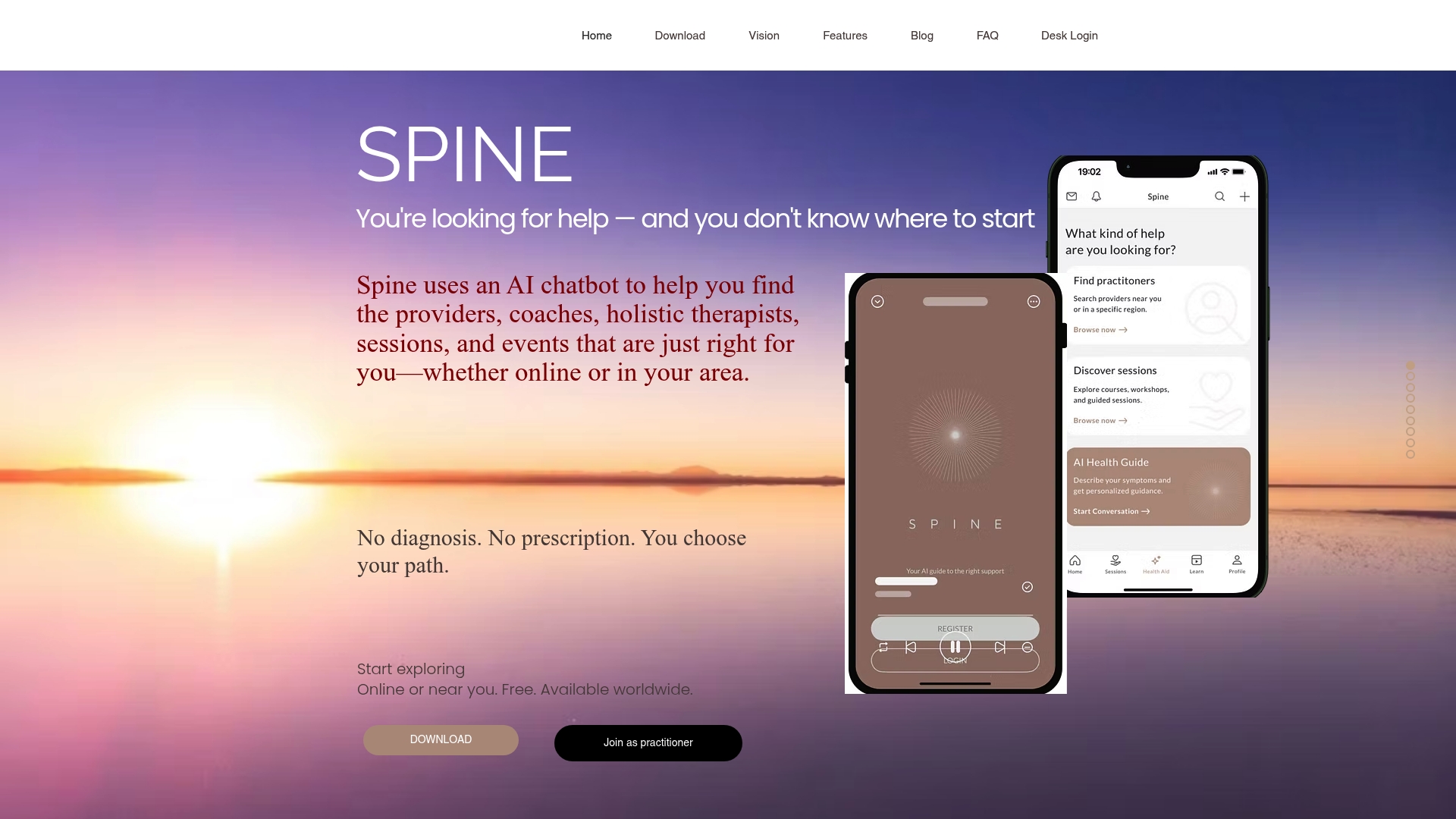
Spine App brings these paths together. You describe what you need in your own words, and Spine App guides you to practitioners, sessions, and resources matched to your situation, whether that is conventional care, a holistic and alternative approach, or both combined. Available on iOS, Android, and Web across 175 countries, Spine App works as a companion that stays with you, not just a one-time search. If you are ready to find support that fits your whole picture, Spine App is a clear place to start.
FAQ
What is the difference between complementary and alternative mental health care?
Complementary care is used alongside conventional treatment, while alternative care replaces it. The distinction determines safety: complementary approaches keep your conventional provider informed and involved.
Are complementary therapies for mental health evidence-based?
Evidence varies by therapy. Mindfulness meditation and yoga have strong research support for anxiety and depression. A 2026 meta-analysis of 68 studies confirmed measurable improvements from combining CAM with conventional care.
Is it safe to use herbal remedies alongside psychiatric medication?
Herbal remedies can interact with psychiatric medications and cause serious effects, including serotonin syndrome. Always disclose every supplement to your prescribing provider before starting.
How do I find a qualified complementary mental health practitioner?
Ask about their formal training, professional membership, and direct experience working alongside conventional mental health providers. Credentials vary widely across complementary fields, so specific questions matter more than general claims.
What does integrative mental health care mean?
Integrative care is coordinated whole-person care where conventional and complementary providers communicate and collaborate on a shared treatment plan. It is the most clinically sound model for combining these approaches.
Recommended