Yoga's Role in Clinical Mental Health: A Patient & Clinician Guide
- astauche6
- 6 days ago
- 9 min read

Yoga is an evidence-based adjunct to conventional mental health care — not a replacement for medication or psychotherapy, but a practice with measurable effects on depression, anxiety, and stress regulation. A systematic review and meta-analysis published in the British Journal of Sports Medicine found a moderate effect on depressive symptoms, with evidence of greater improvement linked to higher session frequency. The Cleveland Clinic describes yoga therapy as a personalized practice used alongside standard care, not instead of it.
“Yoga as a therapeutic intervention in psychiatric disorders appears promising and merits further attention in clinical practice and research.” — The British Journal of Psychiatry
That framing matters. The strongest case for yoga in clinical settings is not that it replaces what works, but that it adds something conventional care often cannot: a way for patients to actively regulate their own nervous systems between sessions.
Table of Contents
What does the research actually show about yoga and mental health?
The BJSM meta-analysis is the clearest starting point. Across 19 studies (1,080 participants), physically active yoga produced a statistically significant moderate reduction in depressive symptoms (SMD = −0.41; 95% CI −0.65 to −0.17; p<0.001). A meta-regression found that higher sessions per week predicted greater improvement (β = −0.44, p<0.01), which is the dose-response signal clinicians should note.
Beyond depression, a PMC evidence review of yoga in psychiatric practice highlights a randomized trial in which yoga as an add-on intervention produced nearly a 30% reduction in obsession scores in OCD patients over four weeks, compared with marginal change in the control group (N=42). A Springer mixed-methods trial found that group CBT combined with therapeutic yoga produced sustained reductions in anxiety and depression at long-term follow-up, outperforming CBT alone (N=59).
Key findings at a glance:
Condition | Study type | Key finding |
Depression | Meta-analysis (19 studies, 1,080 participants) | SMD = −0.41; dose-response with session frequency |
OCD | Randomized add-on trial (N=42) | ~30% reduction in obsession scores over 4 weeks |
Depression + anxiety | Pragmatic preference trial (N=59) | CBT+Yoga superior at 12-month follow-up vs. CBT alone |
Inpatient psychiatric | Frontiers study, SSPU setting | Improved self-care and treatment satisfaction; limited effect on clinical symptoms |
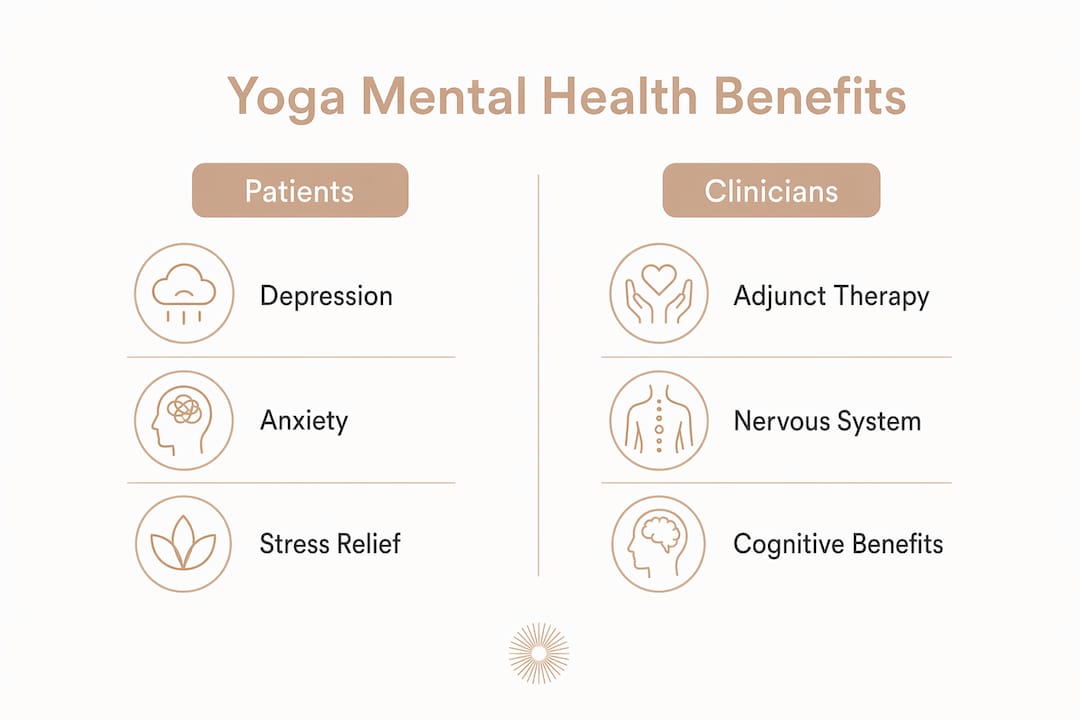
Limitations worth knowing: Most trials are small, heterogeneous in yoga style, and use yoga as an adjunct rather than a standalone treatment. Effect sizes are moderate, not dramatic. The evidence base is growing, but robust large-scale RCTs are still limited.
How yoga actually changes the brain and nervous system
The mechanisms are specific enough to matter clinically. Yoga works through three overlapping pathways: breath regulation (pranayama), mindful movement (asana), and relaxation or meditation. Each targets a different layer of stress reactivity.
Harvard Health reports that regular yoga practice is associated with a thicker cerebral cortex and hippocampus, improved executive function, and higher GABA levels. GABA is the brain’s primary inhibitory neurotransmitter; lower GABA correlates with anxiety and depression. A BJPsych Advances review adds that yoga modulates the hypothalamic-pituitary-adrenal (HPA) axis, lowers stress hormones, increases endorphins, and supports autonomic regulation. These are not soft wellness claims; they are measurable biological changes.
“Yogic practices have been shown to increase serotonin levels in the brain, thus alleviating symptoms of depression and anxiety.” — The British Journal of Psychiatry
For clinicians integrating yoga with CBT, the cognitive pathway is equally relevant. Yoga reduces rumination, promotes behavioral activation, and supports a calmer baseline state, which makes it easier for patients to engage with and retain CBT skills between sessions. You can read more about how body-based practices regulate stress in clinical contexts.
Pro Tip: Sequence breath-based practices (pranayama) before talk therapy sessions when possible. A calmer autonomic state at the start of a session tends to lower the threshold for emotional engagement and reduce avoidance.
Who is likely to benefit, and when should you be cautious?
Yoga as a clinical adjunct is most supported for adults with depressive disorders, anxiety, OCD (in add-on protocols), and maintenance-phase schizophrenia. The PMC clinical guidelines review also notes preliminary evidence for PTSD, ADHD, and substance use disorders, though these require more robust trials before firm recommendations.
Who should seek medical clearance first:
Acute psychosis or recent psychiatric hospitalization
Unstable cardiovascular or respiratory conditions
Severe mobility limitations or recent surgery
Active suicidal ideation (yoga may be introduced later in stabilization)
Accessibility and equity considerations: Yoga therapy in the U.S. is not uniformly accessible. Cost, language barriers, and physical ability all affect who can participate. Therapeutic yoga prioritizes breathwork and simple postures, so people with mobility limits or residual psychiatric symptoms can participate without complex physical demands. Tele-yoga protocols, including standardized modules developed at NIMHANS for depression, schizophrenia, and OCD, extend access to those who cannot attend in person.
Socioeconomic status remains a real barrier. Sliding-scale yoga therapists exist, and some community mental health centers in the U.S. are beginning to embed yoga into group programming, but coverage is uneven.
What does clinical yoga therapy actually look like?
Yoga therapy is not a group fitness class. The Cleveland Clinic defines it as a personalized, goal-focused intervention that includes movement, mindfulness, meditation, relaxation, and breathing, delivered alongside standard care.
Feature | Clinical yoga therapy | Group fitness yoga |
Individualization | High; tailored to diagnosis and goals | Low; general population |
Session frequency | Varies widely; research shows greater benefits with more frequent sessions per week, but in clinical settings, sessions are often scheduled once or twice monthly over a few months, with home practice between sessions | Weekly or more, ongoing |
Therapeutic goals | Symptom reduction, self-regulation | Fitness, flexibility, stress relief |
Practitioner credential | C-IAYT (Certified by International Association of Yoga Therapists) | Varies; often RYT-200 or RYT-500 |
Care team coordination | Yes, coordinated with clinician | No |

In inpatient psychiatric settings, yoga sessions are scheduled separately from other therapeutic activities to maintain clear boundaries and avoid role confusion. Tele-yoga adaptations follow similar structures, with standardized condition-specific modules available for remote delivery.
How to integrate yoga into a clinical mental health care plan
A practical sequence for patients and clinicians:
Screen for contraindications and current treatment goals. Yoga is most appropriate when a patient is stable enough to engage in a structured activity.
Refer to a practitioner with a C-IAYT credential or equivalent clinical training. Ask whether they have experience with your specific diagnosis.
Set goals and obtain informed consent. Agree on measurable targets (e.g., PHQ-9 score, session attendance, functional goals) before starting.
Build a tailored plan. Frequency, style, and focus should match the clinical picture. Depression protocols often emphasize activating postures; anxiety protocols lean toward breath regulation and grounding.
Monitor and review. Use standardized measures at agreed intervals (see the next section). Adjust or pause if symptoms worsen.
Sustain with home practice. Brief daily routines between sessions improve retention of skills and extend the benefits of formal sessions.
For patients unsure how to raise this with their current provider, this guide on asking your therapist about non-pharmacological approaches offers practical language.
Pro Tip: A 5–10 minute home breathwork routine practiced daily between sessions tends to sustain the nervous-system benefits more reliably than longer, infrequent sessions alone.
What outcomes should you realistically expect?
Expect moderate symptom reductions over weeks to months, not rapid remission. The BJSM meta-analysis found an SMD of −0.41, which is clinically meaningful but not large. The 12-month CBT+Yoga trial showed that sustained benefits are achievable, particularly when yoga is maintained alongside psychotherapy.
Metric | Suggested tool | Review interval |
Depressive symptoms | PHQ-9 | Every 4–6 weeks |
Anxiety symptoms | — | Every 4–6 weeks |
Session adherence | Attendance log | Monthly |
Functional goals | Clinician-set targets | At 3 and 6 months |
Maintenance matters. Patients who stop yoga after an initial course often see gradual symptom return. Booster sessions, home routines, or periodic group classes help sustain gains. Escalate care if symptoms worsen despite consistent practice, or if the patient is not engaging with the yoga component after a reasonable trial period (typically 6–8 weeks).
Key Takeaways
Yoga is a moderate-effect adjunct to conventional mental health care, with the strongest evidence for depression and anxiety, and its benefits scale with session frequency.
Point | Details |
Adjunct, not replacement | Yoga reduces symptoms alongside medication or psychotherapy; it does not replace either. |
Dose-response matters | Higher session frequency per week predicts greater symptom reduction per the BJSM meta-analysis. |
Credential check | Look for C-IAYT certification when referring to or seeking a yoga therapist in a clinical context. |
Measure progress | Use PHQ-9 and other tools at 4–6 week intervals to track change and guide clinical decisions. |
Spine App | Spine App helps you find yoga therapists and clinicians who integrate mind-body practices into care. |
Why yoga’s clinical role is still underestimated
The evidence for yoga in mental health is more solid than most clinicians assume, and the hesitation to recommend it often has less to do with the research than with how yoga has been marketed. When a practice is sold as a lifestyle brand, it is easy to dismiss it as a clinical tool. That is a mistake worth correcting.
What the research actually shows is that yoga works through specific, measurable biological pathways, not through general wellness effects. The GABA findings, the HPA axis modulation, the structural brain changes in regular practitioners — these are the same mechanisms targeted by some pharmacological interventions. The difference is that yoga also gives patients something to do between appointments. That agency is undervalued in conventional care models.
The honest caveat is that the evidence base still has gaps. Most trials are small, yoga styles vary widely, and “yoga therapy” means different things in different settings. Clinicians are right to ask for credentials and to set measurable goals. But the appropriate response to imperfect evidence is careful integration, not dismissal.
For anyone navigating the gap between conventional care and mind-body approaches, the Spine App guide on integrating bodywork with mental health care offers a grounded starting point.
Spine App connects you to yoga therapists and integrated care
Finding a yoga therapist with clinical mental health experience in the U.S. is harder than it should be. Most directories do not filter by therapeutic training, and most search engines return fitness studios rather than practitioners who coordinate with psychiatrists or psychologists.
[
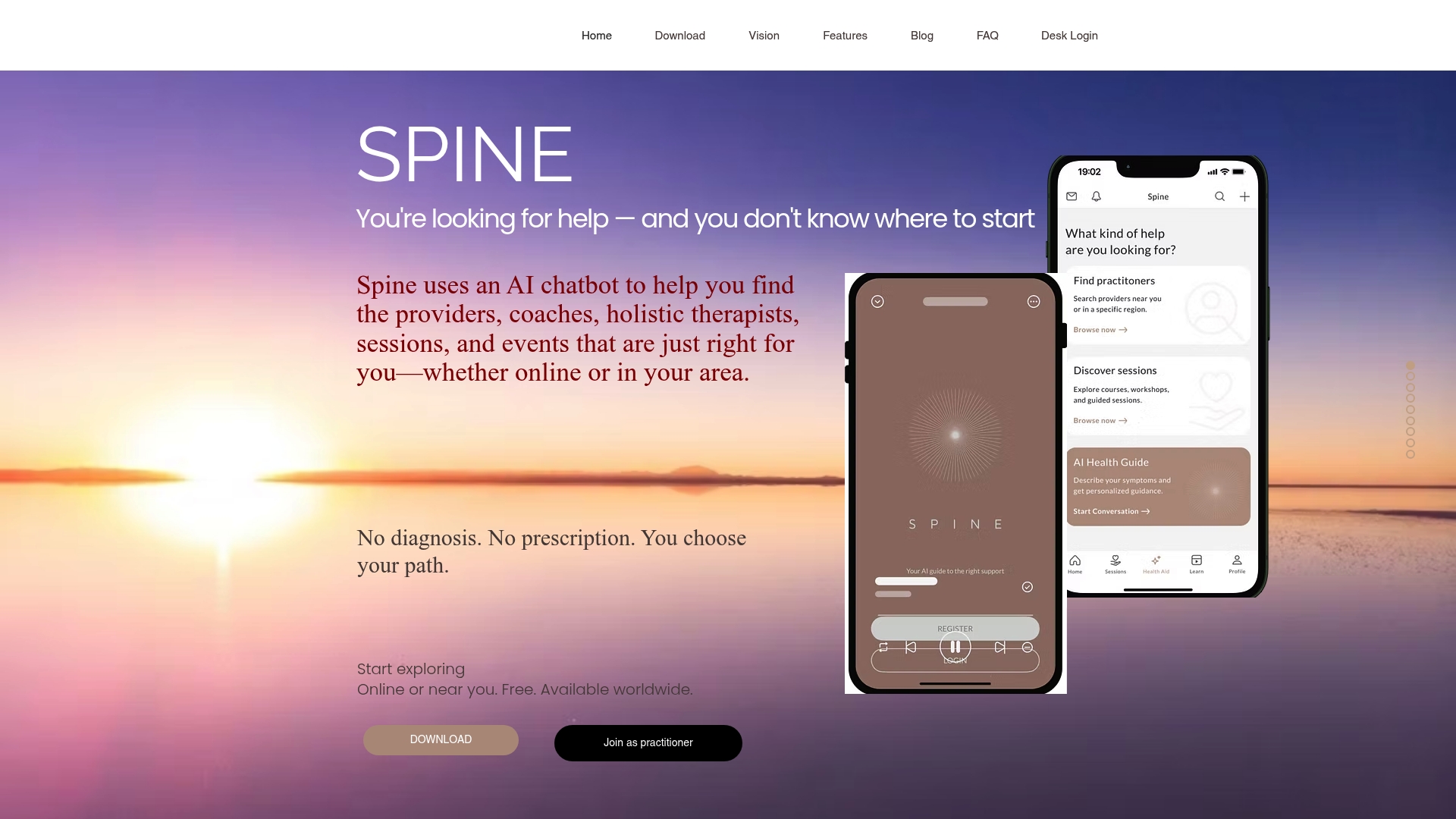
Spine App is built for exactly this gap. You describe what you need in your own words, and Spine App matches you to practitioners, sessions, and resources across conventional care, mind-body approaches, or both. Search by session type, telehealth availability, or specific focus areas like anxiety, depression, or OCD. No guesswork about whether a provider has clinical experience — the filters do that work for you.
Find a yoga therapist or integrated clinician on Spine App and take the next step toward a care plan that works on every level.
Useful sources and further reading
BJSM systematic review and meta-analysis: The primary quantitative evidence base for yoga’s effect on depressive symptoms, including dose-response data. Start here for effect sizes.
PMC evidence review of yoga in psychiatric practice: Covers adjunctive trial results across conditions including OCD, schizophrenia, and anxiety. Useful for clinicians building referral rationale.
Cleveland Clinic: Yoga Therapy overview: Clear, patient-facing description of what yoga therapy involves, how it differs from fitness yoga, and typical session frequency.
Harvard Health: Yoga for better mental health: Accessible summary of neurobiological findings, including GABA, cortical thickness, and executive function.
Springer: CBT+Yoga 12-month outcomes: The strongest long-term evidence for yoga augmenting CBT in adults with depression and anxiety.
BJPsych Advances: Yoga and mental health: Psychiatrist-facing review of mechanisms, clinical recommendations, and safety considerations.
Spine App: Mindfulness in clinical treatment: Practical guide to mindfulness-based practices alongside psychotherapy, with overlap to yoga therapy integration.
This article is general information, not professional medical or psychiatric advice. Confirm current clinical guidelines and your individual situation with a qualified provider.
FAQ
Is yoga a replacement for therapy or medication?
No. Yoga is an adjunct to conventional care. The BJSM meta-analysis and clinical guidelines consistently position it as an add-on, not a standalone treatment for diagnosed mental health conditions.
How many sessions per week does yoga therapy require to see results?
The BJSM meta-analysis found a dose-response relationship: higher session frequency per week predicted greater symptom reduction. In clinical practice, session frequency varies; some programs schedule once or twice monthly in-person visits with encouraged home practice between sessions, while research suggests that more frequent weekly sessions yield greater improvements.
What credentials should a clinical yoga therapist have?
Look for the C-IAYT designation from the International Association of Yoga Therapists. This indicates specific training in therapeutic applications, not just general yoga instruction.
Can yoga help with anxiety as well as depression?
Yes. Yoga practices for anxiety are well-supported, with breathwork and grounding postures showing consistent effects on stress reactivity and autonomic regulation across multiple studies.
Is yoga therapy covered by insurance in the U.S.?
Coverage varies. Most private insurers in the U.S. do not currently reimburse standalone yoga therapy sessions, though some integrated behavioral health programs include it. Check with your insurer and ask your provider about billing options.
How does Spine App help with finding yoga therapy?
Spine App matches you to yoga therapists and clinicians who integrate mind-body practices into mental health care, with filters for session type, telehealth, and clinical focus areas.
Who should not start yoga therapy without medical clearance?
People with acute psychosis, unstable cardiovascular conditions, severe mobility limitations, or active suicidal ideation should consult their clinical team before beginning any yoga program.
Recommended