How to Ask Your Therapist About Complementary Approaches
- astauche6
- a few seconds ago
- 7 min read

Complementary approaches are defined as supportive methods used alongside traditional therapy to address mental, physical, and emotional well-being together. Knowing how to ask therapist about complementary approaches is the difference between a fragmented wellness plan and one that actually holds together. The industry term for this kind of care is integrative therapy, a framework where licensed clinicians blend evidence-based techniques with additional modalities based on individual need. This article explains what these approaches are, which questions to ask, how to have the conversation well, and what to do when you hit resistance.
What are complementary approaches and how do they work with therapy?
Complementary approaches are methods that support traditional therapy without replacing it. They address dimensions of well-being that talk therapy alone does not always reach, including the body, nervous system, and creative expression. Integrative therapy frameworks pair clinical work with these modalities based on what a specific person needs at a specific time.
Common complementary methods include:
Mindfulness-based practices such as Mindfulness-Based Stress Reduction (MBSR) and Mindfulness-Based Cognitive Therapy (MBCT), both of which have strong research support for anxiety and depression
Yoga therapy, which works with breath and movement to regulate the nervous system between sessions
Art therapy and expressive arts, which give people a non-verbal channel for processing trauma or grief
Somatic work, including somatic experiencing and body-centered practices that address how stress is stored physically
Nutritional psychiatry, which examines how diet affects mood and cognitive function
These methods work best when they supplement a solid clinical foundation. Yoga supports CBT, art therapy enriches trauma processing, and mindfulness improves emotional regulation between sessions. None of these replace proven treatments for severe conditions. They add depth and reach to care that is already working.
The key distinction is between complementary and alternative. Complementary means alongside. Alternative means instead of. A therapist who practices integrative care will always position these methods as additions, not substitutions.

How to ask your therapist about complementary approaches
Preparing specific questions before the conversation makes a real difference. Vague requests get vague answers. Concrete questions open a real dialogue.
“Are you open to discussing complementary modalities as part of my care?” This tells you immediately whether your therapist has experience with integrative approaches or holds firm boundaries around them.
“What is your experience with [specific method]?” Asking about mindfulness, somatic work, or art therapy specifically gives you a clearer picture than asking about “alternative therapies” in general.
“How would you coordinate with another practitioner if I worked with one?” Coordinated communication between providers is standard professional practice. A good therapist will have a clear answer.
“What evidence supports this approach for my situation?” Competent therapists discuss the evidence, benefits, and limitations honestly. This question separates informed clinicians from those who are simply enthusiastic.
“Are there any risks or interactions with my current medications I should know about?” Open communication about medications and all treatments you are receiving is critical to avoid interactions and ensure safety.
“How will we measure whether this is helping?” Any method worth adding to your care plan should have a way to track its effect on your progress.
Watch for red flags in the answers. A practitioner who claims a complementary method will cure a condition, or who suggests stopping medication without medical supervision, is operating outside safe professional boundaries. These are not signs of open-mindedness. They are warning signs.
Pro Tip: Before your appointment, write down the specific complementary practice you want to discuss and one concrete reason you are interested in it. Therapists respond better to “I’ve been reading about MBSR for anxiety and want to know if it fits my treatment” than to “I want to try something more natural.”
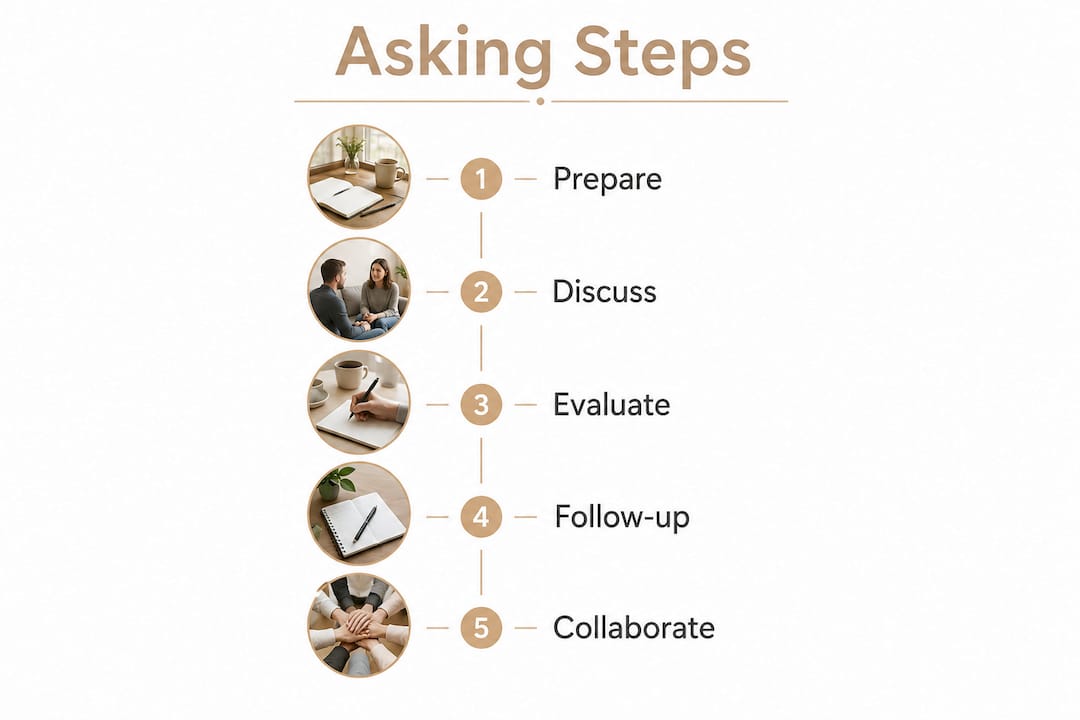
How to approach the conversation effectively
The most productive framing is sharing, not seeking permission. You are informing your therapist about what you are exploring and inviting their clinical input. This distinction matters because it shifts the dynamic from patient-asking-authority to two people collaborating on a care plan.
Therapists’ caution about complementary approaches is usually clinical risk management, not closed-mindedness. When a therapist hesitates, they are often thinking about treatment continuity, contraindications, or liability. Acknowledging this directly in the conversation reduces friction. You might say:
“I want to be transparent about what I’m exploring outside our sessions. I’d value your perspective on whether it fits with what we’re working on, and I’d like you to help me monitor how it affects my progress.”
This kind of statement does several things at once. It signals respect for the therapist’s clinical role. It invites monitoring rather than demanding endorsement. And it keeps the therapeutic relationship intact.
A few practical approaches that support the conversation:
Bring written notes. A brief summary of what the practice involves and why you want to try it shows you have done your research.
Ask for a trial period. Proposing a defined window, such as six weeks, with a check-in makes the idea feel lower-risk to a cautious therapist.
Be clear about your goals. Connect the complementary method to a specific therapy goal, such as reducing anxiety between sessions or improving sleep.
Building a wellness team rather than expecting one provider to cover everything is the most realistic model for comprehensive care. Your therapist handles the clinical work. A yoga therapist handles the body. A nutritionist handles the biochemical layer. Each person stays in their lane, and you coordinate the whole picture.
Common challenges when discussing integrative health options
The most common obstacle is scope of practice. Therapists are licensed to provide mental health treatment. They are not licensed to prescribe nutritional protocols, lead yoga classes, or perform somatic bodywork. When a therapist says “that’s outside my scope,” they are not dismissing you. They are being accurate about their professional boundaries.
The second challenge is the evidence gap. Some complementary methods have strong research support, such as MBSR and MBCT. Others have limited or mixed evidence. A therapist trained in evidence-based practice will naturally be more cautious about methods with thinner research backing. This is a feature, not a flaw.
Pro Tip: If your therapist is unfamiliar with a specific modality, ask them to help you evaluate it rather than asking them to endorse it. “Can you help me think through whether this is a good fit?” is a question most therapists will engage with willingly.
Common challenges and how to address them:
Therapist unfamiliarity with a method. Ask them to help you research it together, or bring a summary from a credible source such as the National Center for Complementary and Integrative Health (NCCIH).
Concerns about practitioner credentials. Practitioners should be registered with professional bodies and carry liability insurance. Verify credentials beyond online profiles.
Misunderstanding about what “alternative” means. Clarify that you are not replacing therapy. You are adding support alongside it.
Concerns about conflicting treatment goals. Share what you are exploring and ask your therapist to help monitor whether it supports or interferes with your clinical progress.
Ongoing open communication is the solution to most of these challenges. A single conversation is rarely enough. Checking in regularly about how complementary practices are affecting your mood, sleep, and session work keeps everyone informed and the care plan coherent.
Key takeaways
Asking your therapist about integrative health options works best when you come prepared with specific questions, frame the conversation as sharing rather than seeking permission, and build a coordinated care team rather than expecting one provider to do everything.
Point | Details |
Define your terms clearly | Use “complementary” to mean alongside therapy, not instead of it, to avoid confusion. |
Prepare specific questions | Ask about evidence, risks, medication interactions, and how progress will be measured. |
Expect and respect boundaries | Therapist caution is usually clinical risk management, not resistance to your needs. |
Verify practitioner credentials | Any complementary provider should be registered with a professional body and carry liability insurance. |
Build a coordinated team | Separate providers for therapy and complementary support is professional and standard practice. |
What I’ve learned about asking for integrated care
I’ve talked with a lot of people who waited too long to bring up complementary practices with their therapists. They assumed the therapist would dismiss the idea, so they kept two separate worlds running in parallel without ever connecting them. That silence is where things go wrong.
The therapist doesn’t know you’re doing breathwork three times a week. The yoga therapist doesn’t know you’re processing trauma in CBT. Nobody has the full picture, and you end up carrying the coordination burden alone.
What I’ve found is that most therapists, when approached with genuine curiosity and respect for their clinical role, are more open than people expect. The conversation just needs to start from the right place. You are not asking for permission. You are sharing what matters to you and inviting collaboration.
The types of support that complement therapy are genuinely wide. Somatic work, nutritional psychiatry, expressive arts, movement-based practices. The research on many of these is growing. But none of it lands well if it’s happening in a silo. The integration is the point.
One more thing worth saying directly: if your therapist is consistently dismissive of any conversation about your broader wellness, that is useful information about the fit of the relationship. A good therapist doesn’t have to practice every modality. They do need to be willing to talk about your whole life.
— Sylvia
Finding practitioners who support integrative care
Knowing what to ask is only part of the work. Finding a therapist who is genuinely open to discussing integrative health options is the other part.
[
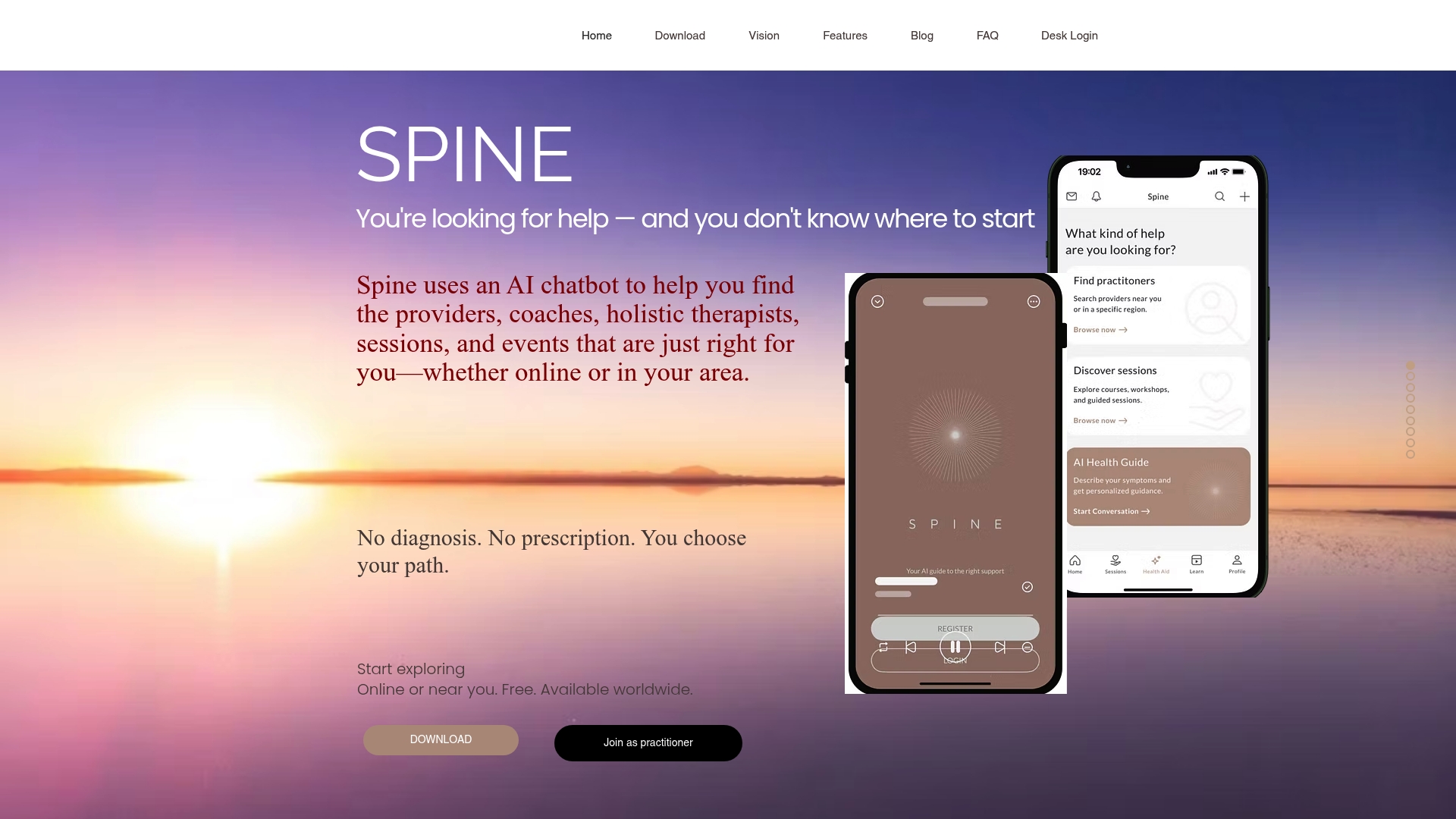
Spine App helps you describe what you need in your own words and then guides you to practitioners, sessions, and resources matched to your situation. Whether you are looking for a therapist who works within a conventional framework, a practitioner focused on body-centered or alternative care, or both together, Spine App connects you across all three paths. Available in 175 countries on iOS, Android, and Web, it is built for people who want care that fits their whole life. Find your practitioner and start building a care team that actually communicates.
FAQ
What does “complementary approach” mean in therapy?
A complementary approach is any method used alongside traditional therapy to support mental and physical well-being, such as mindfulness, yoga therapy, or somatic work. It supplements clinical treatment rather than replacing it.
How do I bring up complementary methods with my therapist?
Frame the conversation as sharing what you are exploring and asking for clinical input, not seeking permission. Specific questions about evidence, risks, and how to measure progress make the dialogue more productive.
What if my therapist is skeptical of complementary practices?
Therapist caution is usually about clinical risk management, not closed-mindedness. Acknowledge their perspective, ask them to help you evaluate the practice, and invite them to monitor how it affects your progress.
Is it normal to have separate providers for therapy and complementary care?
Yes. Having separate providers for therapy and complementary support is both common and professionally appropriate. Coordinated communication between providers produces the best outcomes.
How do I check if a complementary practitioner is qualified?
Verify that the practitioner is registered with a recognized professional body and carries liability insurance. Credentials should be verifiable beyond an online profile or website listing.
Recommended