
How to Prepare for Therapy Before Your First Session

Updated: Oct 5

Pick one to three things you want to talk about, write them down, and bring your ID and insurance card if you’re seeing someone in network. That’s the bulk of it. Spine App can help you find a session or save resources while you plan, and if you’re in crisis right now, call or text 988 instead of waiting for an appointment. You don’t need a polished story to walk in the door.
TL;DR:
Most first therapy appointments benefit from preparing a brief list of topics and confirming appointment details, not from creating a detailed narrative.
Bringing a photo ID, insurance card, medication list, and a short summary of your concerns helps streamline intake and reduces anxiety.
Setting concrete, measurable goals like reducing panic episodes or improving sleep provides clear progress markers for both you and your therapist.
The client-therapist relationship significantly influences therapy outcomes, so assessing comfort and collaboration after a few sessions is essential.
Between sessions, light journaling about weekly mood and experiences fosters ongoing engagement and tracking progress without overwhelming yourself.
Spine App is free: find people who help and a community that gets it. Get it on App Store · Google Play
Table of Contents
How Do I Get Ready for Therapy in the Days Before?
A little structure in the week before your appointment does more for your nerves than any amount of worrying. You’re not writing a memoir. You’re jotting down enough to make the first hour useful instead of a blur of small talk and forms.
Start three or four days out, not the night before. Give yourself time to notice patterns instead of dumping everything you remember in one panicked sitting.
Keep a short daily log. Each night, write two or three lines: what happened, how you felt, what triggered it. You’re not aiming for literature, just breadcrumbs.
Answer “why now?” in one sentence. Something pushed you to book this appointment. Name it. A short “why now” statement also makes any pre-session consultation call more productive, according to guidance from Time on what to expect at your first session.
Narrow your list to one to three agenda items. Sleep, a relationship, work stress, whatever keeps surfacing. More than three and the first session turns into a highlight reel instead of a conversation.
Confirm the logistics. Double check the appointment time, finish any intake forms the practice emailed you, and verify your insurance or payment method so it’s not a surprise at check-in.
Decide your one goal for session one. Not “fix my anxiety.” Something closer to “explain what’s been happening at work and see what they suggest.”
Pro Tip: If you’re drawing a blank on what to write, try finishing this sentence every night for a week: “Today was hard because…” or “Today felt lighter because…” The pattern usually shows up faster than you expect.
One more thing worth saying plainly: this checklist is for scheduled care, not emergencies. If you’re having thoughts of harming yourself or feel unsafe right now, 988 connects you to crisis support 24 hours a day. Save that number in your phone before your appointment, not after.
What Should I Bring to My First Session?
Walking in prepared saves you from filling out forms with a shaky pen while a stranger watches. Most of what you need fits in a small folder or the notes app on your phone.
A photo ID and your insurance card, if you’re using insurance.
A payment method for your copay or session fee.
A list of current medications, including dosages and the prescribing doctor’s name.
A brief written summary of why you’re seeking therapy and any prior diagnoses or treatment history, since consumer guides on first sessions consistently note this speeds up intake and eases anxiety.
Your one to three agenda items from the checklist above.
Any accessibility needs or communication preferences you want the therapist to know before you sit down.
Expect paperwork. Most first appointments open with intake forms covering your history, current symptoms, and consent to treatment, a pattern confirmed by Time’s reporting on first therapy sessions. Somewhere in that paperwork, your therapist will walk through confidentiality and its limits. In the United States, those limits are shaped by HIPAA’s privacy rules, which require your therapist to disclose specific situations, like an immediate risk to your safety or someone else’s, where they’re legally obligated to break confidentiality. Ask them to explain it in plain language if the form’s wording is dense. If you need a chair with arms, a hearing accommodation, or a session scheduled around a work shift, say so when you book rather than mentioning it as you’re walking out the door.
How Do I Set Goals for Therapy Sessions?
Vague hopes like “feel better” are hard for anyone to work with, including your therapist. Specific, small goals give both of you something to actually track.
Pick a target you can measure or notice. Fewer panic episodes per week, speaking up once in a difficult conversation, sleeping through the night three times instead of zero. Concrete beats abstract.
Separate symptom goals from skill goals. Reducing anxiety is one kind of goal. Learning to set a boundary with a parent is another. Both are valid, and naming which type you’re working on helps your therapist choose an approach.
Build a simple mini-agenda for each visit. Check in on how the week went, spend the bulk of the time on your main topic, ask any questions that came up, and close with whatever practice or homework makes sense before the next visit.
Ask your therapist to track progress with you. Some use brief rating scales at the start or end of sessions. Others just check in verbally. Either way, ask directly: “Can we look back at this goal in a few weeks and see where it stands?”
Goals shift. What you want in week two rarely matches what matters by week eight, and that’s expected, not a sign you did something wrong.
How Do I Know if My Therapist Is a Good Fit?
The relationship itself, not just the technique, is one of the strongest predictors of whether therapy actually works. Decades of research on the therapeutic alliance point to the same conclusion across different treatment styles: the working bond between you and your therapist matters as much as, and sometimes more than, which specific method they use.
Fit isn’t mysterious. A few signs tend to show up early:
You feel heard, not just processed.
Your therapist asks follow-up questions instead of moving straight to advice.
Sessions feel collaborative, like you’re building a plan together rather than receiving instructions.
You can disagree with something they say without the conversation shutting down.
Give it three or four sessions before deciding either way. First appointments are often stiff for everyone involved. If something still feels off after that window, say so directly: “I’m not sure this approach is landing for me, can we try something different?” Therapists who routinely ask for that kind of input tend to get better results, a pattern backed by research on feedback-informed treatment, which shows outcomes improve when clients speak up and clinicians adjust in response.
Pro Tip: If direct feedback feels awkward, try softening the frame: “Something I’ve noticed is…” That opens the door without turning it into confrontation.
If it’s still not working after honest feedback, switching therapists isn’t failure. It’s a normal part of finding the right match.
What Should I Do Between Therapy Sessions?
Therapy doesn’t stop when you leave the room. Clients who stay engaged between appointments, including doing whatever small practice their therapist suggests, tend to see meaningfully better outcomes, according to research on client engagement in treatment.
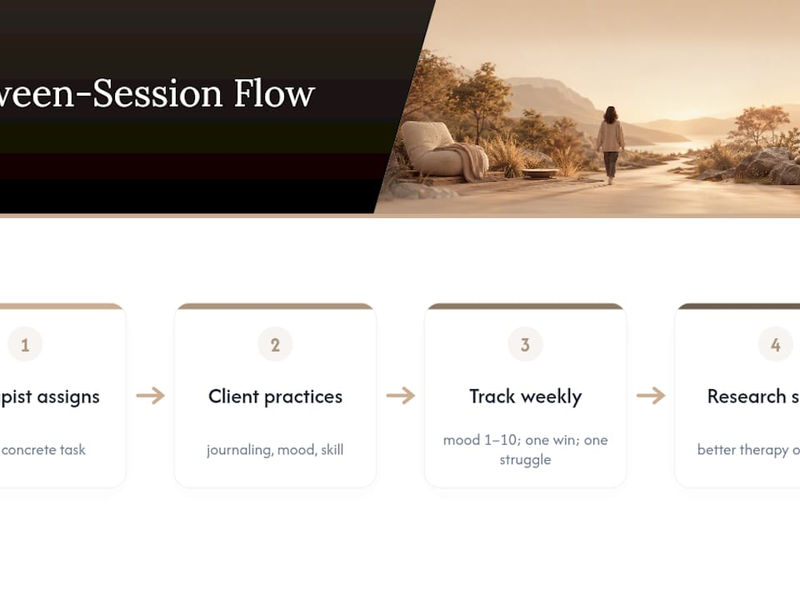
Journaling doesn’t need to be elaborate. Three prompts work well for most people: What came up this week that connects to what we discussed? What did I try, and what happened? What do I want to bring up next time? Related clinical research on note-taking between sessions supports this kind of light tracking as a way to retain what actually happens in therapy, since most people forget the bulk of a session within days.

A weekly template can be as simple as three lines: mood (1 to 10), one win, one struggle. Share whichever parts feel useful with your therapist; you’re never obligated to hand over a private journal in full.
For anxiety, a small assignment might be noticing and naming the trigger before reacting. For mood, tracking one activity that reliably helps, even slightly. For relationships, practicing one specific phrase in a low-stakes conversation before trying it in a harder one.

Should I Prepare Differently for Virtual vs. In-Person Sessions?
Format changes the logistics, not the substance. A few adjustments on each side keep the conversation from getting derailed by technical or environmental friction.
For virtual sessions:
Test your camera, microphone, and internet connection at least ten minutes before your start time.
Use headphones if you share your space with anyone.
Find a room where you can close a door, and have a phone number as backup in case the video connection drops.
For in-person visits:
Arrive five to ten minutes early to account for parking or waiting-room check-in.
Plan a short transition afterward, a walk, music in the car, before jumping into the rest of your day.
Mention any format preference or need for privacy directly with the practice when you schedule.
If an interruption happens on either end, just say so. Therapists deal with dropped calls and knocking kids constantly.
Can Spine App Help Me Get Ready for Therapy?
Spine App won’t do the reflecting for you, but it can take some of the friction out of the search. As a life companion for body, mind, and soul, it helps you find sessions across conventional, holistic, and combined care paths, save resources you want to revisit, and browse podcasts while you’re building your own preparation routine.
If you’re still deciding what kind of support fits your situation, having one place to look, rather than a dozen open browser tabs, cuts down on decision fatigue before you’ve even booked an appointment. Written and reviewed content on the platform, including this piece, is built around the same idea driving this checklist: preparation should lower your anxiety, not add to it.
Showing Up Is Already the Hard Part
Booking the appointment, showing up, sitting in the waiting room, that’s the part that takes the most courage, not whatever you say once you’re in the chair. Most people I’ve seen write about this moment focus on saying the right thing. I’d focus on just showing up with one honest sentence about why you’re there.
Try one item from the checklist above this week. Write your “why now” line. Confirm your appointment. Pack your insurance card. Small, concrete steps beat a mental to-do list every time.
A Simple Next Step With Spine App
Spine App is a life companion for body, mind, and soul, built to help you find practitioners, sessions, events, and resources across conventional care, holistic and alternative care, or both, matched to your situation rather than sorted into a ranked list. It maps directly onto the checklist in this article: search for a practitioner near your goals, save sessions or articles you want to revisit before your appointment, and book directly when you’ve found the right fit.

If you want something to listen to while you build your own preparation routine, the Spine App podcast covers conversations across care paths that can help you think through what you want from your first session. And if you’re weighing whether therapy alone covers what you need or whether combining it with another kind of support makes more sense, that’s worth exploring before you book, not after. Open the app, describe what you’re looking for in your own words, and see what it matches you with.
Where to Go for More Support
Crisis support: 988 is available 24/7 by call or text for anyone in the United States experiencing a mental health crisis.
Privacy and confidentiality: HHS’s HIPAA guidance explains the legal limits therapists follow around your health information.
Research on therapy outcomes: PMC’s review of therapeutic alliance and studies on feedback-informed treatment explain why the client-therapist relationship and honest feedback shape results.
First-session logistics: a practical checklist for preparing for your first appointment covers additional day-of tips.
This article is general information, not a substitute for advice from a qualified doctor. Consult a qualified healthcare professional about your own circumstances before acting on anything here.
Sources
FAQ
Am I Supposed to Prepare for Therapy?
You don’t need a polished narrative, but jotting down one to three topics and confirming logistics like insurance and ID beforehand makes the first session more productive, according to guidance on what to expect at your first appointment.
What Should I Avoid Saying During Therapy?
There’s no official list of banned topics. The bigger risk is holding back what actually matters out of fear of judgment, since honest disclosure is part of what makes the therapeutic alliance work.
What Is the “Two Year Rule” in Therapy?
There’s no established clinical standard called the “two year rule.” Treatment length varies widely by goals and approach, so ask your therapist directly how they think about timelines for your specific situation.
What Counts as a Red Flag in a Therapist?
Signs to watch for include a therapist who dismisses your concerns, breaches confidentiality outside the legal exceptions HIPAA outlines, or consistently steamrolls your input instead of collaborating with you.
How Do I Know if My First Session Went Well?
You don’t need to feel instantly better. A good first session usually means you felt heard, understood how confidentiality works, and left with a rough sense of what comes next.
What if I Get Emotional or Overwhelmed During a Session?
That’s a normal part of therapy, not a sign something went wrong. Tell your therapist you need a moment; part of their job is helping you sit with discomfort at a pace that feels manageable.
Can Spine App Help Me Find a Therapist That Fits My Situation?
Yes. Spine App lets you describe what you’re looking for in your own words and matches you with practitioners and sessions across conventional, holistic, or combined care paths based on your situation.
Recommended
About Spine App
Spine App is a free life companion app for your health: it connects you with real practitioners – conventional, holistic or both – lets you book sessions directly, and checks in afterwards to ask what helped.
Written by the Spine App Editorial Team.
Spine App is free: find people who help and a community that gets it. Get it on App Store · Google Play


